White is loved for its purity, so let’s see how to select the centrepiece that will transform your interior.
Defining the dominant decorative style
Observe your current furniture to identify the main atmosphere. A white light fitting must integrate without clashing with your furniture. The goal is to create immediate visual unity. It’s the first step for a successful and coherent decor.
Opt for clean-lined forms to avoid overloading your sight. White already brings great lightness. Choose lines that complement your objects without ever stifling them unnecessarily.
Minimalism remains a safe bet for this colour. Don’t seek complexity at all costs. A simple structure often enhances space better than an overly talkative design.
Analysing dimensions and ceiling height
Take out your tape measure before falling for a bulky model. The size must allow free movement. A lamp that is too imposing can quickly become a daily nuisance.
Adjust the cable height precisely for your pendants. A fitting that is too low cuts the room’s perspective. Conversely, one that is too high seems lost. Find the right balance for optimal visual comfort in your home.
Consider the opening of nearby doors and cupboards. Nothing is more frustrating than a preventable bump. Anticipate these technical details to guarantee a serene and durable installation.
Prioritising LED technology and colour temperature
Opt for low-energy LED bulbs. They use less energy than an incandescent bulb and save money in the long run. These models produce little heat and last a very long time.
Choose between warm white or a more neutral rendering. Warm creates an intimate and relaxing atmosphere. Neutral is perfect for working or cooking efficiently. Your decision will depend solely on the intended use for each specific area.
Always check the compatibility of your dimmer switch. Not all bulbs support this option. Yet it’s ideal for modulating the intensity according to your current desires.
Selecting the material according to the desired effect
Once the style and technical aspects are validated, it’s time to get a feel for the texture of your future lighting.
Opting for the softness of textile and paper
Linen remains a noble material for diffusing light. It softens the rays for a cosy atmosphere. It’s perfect for a living room or bedroom. You thus obtain a gentle brightness that never tires the eyes.
Paper brings a much-appreciated vaporous lightness. These structures seem to float in the air. They give a poetic and natural touch to your ceiling without weighing it down visually.
These natural materials breathe and live with your interior. They break the cold side of pure white. The mix of textures enriches your decoration subtly.
Choosing the robustness of metal and ceramic
Matt lacquered metal reinforces the industrial look of your room. It’s a sober and modern finish. It withstands time well and is very easy to clean.
Ceramic with an artisan feel brings authentic character. Wavy or textured surfaces add charming little irregularities. It’s an excellent way to add personality to a white object. This noble material transcends trends without ever fading.
These solid materials are perfect for high-traffic areas. They aren’t afraid of everyday knocks. It’s a safe investment for lasting decoration.
Harmonising brightness in every living area
But beyond materials, it’s the strategic placement of each light source that will make all the difference to your comfort.
Installing a central light source in the living area
An imposing chandelier structures the volume of your living room. It becomes the central point of the room. Choose a model that asserts your personality. It’s the element that draws all eyes upon entering the house.
Place your light fitting just above the dining table. This creates an island of conviviality for your meals. The downward light showcases your dishes and guests.
Avoid models that are too small for large spaces. White can quickly seem insignificant if it lacks scale. Dare to go for a generous size to leave a lasting impression with elegance.
Opting for discreet wall lights in corridors
Punctuate your corridors with lateral light points. White wall lights often blend into the wall. They light the way without cluttering the narrow passage space.
Save floor space by removing unnecessary floor lamps. Movement becomes more fluid and safe, especially at night. It’s a practical and aesthetic solution for transition areas. You optimise every available square metre.
Play with repetition for a strong visual effect. Align three or four identical models. This gives a very interesting impression of length and depth.
Securing lighting in wet rooms with appropriate ratings
Always check the IP rating on the product page before choosing a light for your bathroom, and ask an electrician about bathroom zones: only a few of our white models are rated IP44. Electrical safety should never be neglected for your comfort. Choose models designed specifically to resist ambient humidity.
Maintain perfect visibility for your morning routine. Avoid shadows cast on the face in front of the mirror. Frontal lighting remains the best option for getting ready.
White brings an immediate sense of cleanliness. It’s the ideal colour for a wet room. It reinforces the zen and hygienic aspect of your wellness space.
Our white light fittings in detail
Our white light fittings cover every type of light: wall lights make up about a third of the selection, pendant lights almost as much, chandeliers one model in five and ceiling lights the rest. Metal is used on nearly half of the models, followed by aluminium, glass, wood and ceramic. The look is mostly modern and minimalist, sometimes Scandinavian, and white is often combined with black, grey or gold. Examples: the white wavy ceramic wall light, the opal glass globe pendant light and the LED ring ceiling light.
E27 is the most common fitting, followed by integrated LED, G9 and GU10, and most models are sold without bulbs. More than half of our white lights ship from our warehouse in Poland, most of the others from China. Which white light for which room? A pendant light or a chandelier for the living room and the dining room, wall lights for the bedroom and the hallway, and an LED batten or ring ceiling light for the kitchen.
See also: white ceiling lights, white chandeliers and white pendant lights.
Frequently asked questions about white light fittings
Do white light fittings give a bright white light?
Not necessarily: the colour of the fitting does not set the colour of the light. That depends on the bulb, so choose 2700 to 3000 K for a warm atmosphere, or 4000 K if you want bright white lights in a kitchen or a workspace. Integrated LED models state their colour temperature on the product page.
Are bulbs included with white lights?
Most of our white lights are sold without bulbs. The product page states the fitting (E27, G9 or GU10) and whether a bulb is included; integrated LED models need no bulb.
Does white lighting suit a small room?
Yes. White blends into light-coloured walls and ceilings, so a white light fitting looks less bulky than a dark one, which helps in a small bedroom or a narrow hallway.

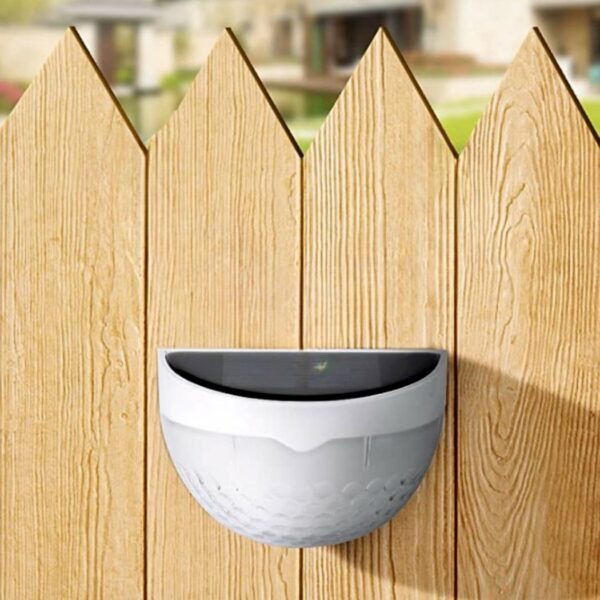

 £58.99 Add to cart - £58.99 This product has multiple variants. The options may be chosen on the product page
 £109.99 Add to cart - £109.99 This product has multiple variants. The options may be chosen on the product page
 £55.99 Add to cart - £55.99 This product has multiple variants. The options may be chosen on the product page
 £113.99 Add to cart - £113.99 This product has multiple variants. The options may be chosen on the product page
 £172.99 Add to cart - £172.99 This product has multiple variants. The options may be chosen on the product page
 Price range: £42.99 through £65.99 Add to cart - £65.99 This product has multiple variants. The options may be chosen on the product page
 £413.99 Add to cart - £413.99 This product has multiple variants. The options may be chosen on the product page

 £117.99 Add to cart - £117.99 This product has multiple variants. The options may be chosen on the product page
 £126.99 Add to cart - £126.99 This product has multiple variants. The options may be chosen on the product page
 £42.99 Add to cart - £42.99 This product has multiple variants. The options may be chosen on the product page
 £63.99 Add to cart - £63.99 This product has multiple variants. The options may be chosen on the product page
 £101.99 Add to cart - £101.99 This product has multiple variants. The options may be chosen on the product page
 £86.99 Add to cart - £86.99 This product has multiple variants. The options may be chosen on the product page


 Price range: £516.99 through £697.99 Add to cart - £697.99 This product has multiple variants. The options may be chosen on the product page


 Price range: £215.99 through £344.99 Add to cart - £344.99 This product has multiple variants. The options may be chosen on the product page


