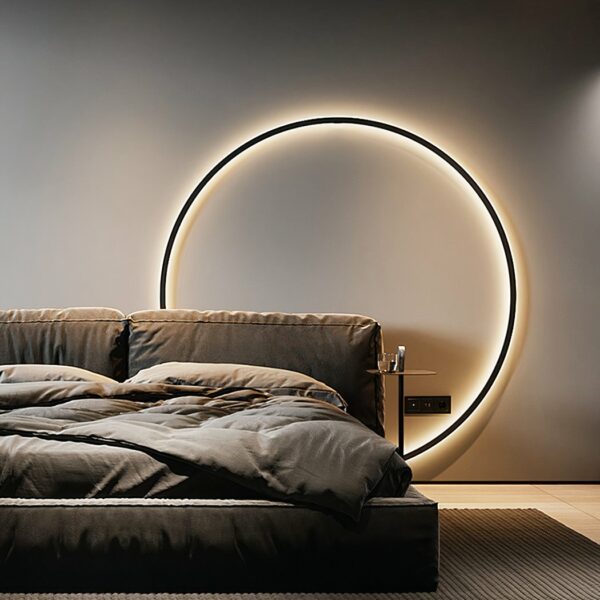
After defining the desired general ambience, it is time to look at the concrete lighting needs for every corner of the living area.
Defining the Needs Between Direct Light and Soft Ambience
It is essential to distinguish your reading areas from your relaxation zones. A bright, focused light promotes optimal concentration. Note that your living room often accommodates multiple, simultaneous activities.
Anticipate the technical aspect by checking your electrical outlets. We advise you to validate the location of the cables in the ceiling. This precaution avoids any complications when installing your pendant light.
Choose a soft ambience for your evening relaxation moments. Use secondary light sources like wall lights. Your visual comfort relies on this balance between intensity and softness.
Measuring the Room’s Volume for Proportional Sizing
You must consider your ceiling height before any purchase. A light positioned too low hinders the movement of your guests. Maintain a minimum clearance of 2.15 m to guarantee a fluid passage.
Adapt the diameter of your chandelier to the room’s volume. An imposing model saturates a small living space. Conversely, a too-discreet pendant light completely disappears in a large living room.
Seek visual harmony by respecting the scale of your furniture. A balanced living room results from these simple proportion calculations. Always consider the total span of the light for a perfect integration.
Selecting Materials in Keeping with Existing Furniture
Pay attention to the colour matching between metal finishes and wood. The textures of your light should echo your furniture. This creates an immediate and particularly elegant visual unity.
Maintenance of surfaces remains a major selection criterion. Dust settles quickly on structures with complex shapes. Choose smooth materials, which are simpler to wipe clean during your housework.
Bet on the durability of textures for intensive daily use. Glass and metal are reliable and robust choices. Invest in resistant components to guarantee the longevity of your interior decoration.
Optimising Light According to Activity Zones
Once the basics are established, the next step is to structure the light so that it truly serves your daily needs.
Creating a Reading Nook with Targeted, Directional Light
Position your floor lamp to the side or just behind your favourite armchair. This strategic arrangement ensures that the shadow cast by your body never masks the pages of your book.
Choose absolute precision of the light flow to preserve your visual comfort. A too-diffuse beam tires the retina prematurely. Opt for an adjustable head to fine-tune the beam with surgical accuracy.
The aesthetic of this specific light transforms a simple seat into a true personal refuge. We find that style here reinforces the utilitarian function. Your space thus gains in character and depth.
Highlighting the Coffee Table with a Suitable Central Pendant
Centring your light over the coffee table is essential to structure your reception area. This arrangement creates a magnetic focal point. A perfectly aligned pendant light visually orders your entire living room.
Adjust the height to between 60 and 70 centimetres above the tabletop for total harmony. This precise adjustment preserves visibility between your guests. The conviviality of your exchanges depends directly on this spatial balance.
The light intensity should remain warm while allowing you to clearly see objects placed on the table. We recommend avoiding any direct glare. Controlled light enhances your shared moments without assaulting the eyes.
Using Wall Lights to Mark Circulation Paths
Indirect sources play a decisive role in the perception of your interior. They eliminate shadow zones that tend to visually shrink your volumes. Your walls then act as true natural reflectors.
Lighting the vertical walls allows you to considerably increase the perceived depth of the room. This is an effective method to enhance living rooms with modest dimensions. The space immediately seems more breathable and open.
Space your wall lights regularly to guide the eye fluidly. We recommend models that project light upwards for a soothing ambience. Fix them between 1.50m and 1.80m from the floor for optimal diffusion.
Mastering Technical and Energy Aspects
Beyond placement, the pure performance of your bulbs guarantees lasting comfort and real savings.
Choosing High-Performance LED Bulbs
Choose the flow in lumens to evaluate brightness. Forget about watts to measure real power. The higher the lumens, the more intense the light. This is the number one selection criterion for your living room.
The longevity of LED components is exceptional. These bulbs last for years without weakening. You thus reduce the frequency of tedious replacements. Your peace of mind is preserved over time.
Make significant energy savings over the months. The electricity bill is noticeably lighter. This is a sensible choice for your home. Performance finally meets efficiency.
Understanding the Importance of the Colour Rendering Index
The CRI defines the ability to render natural light. A high value guarantees natural colours in your home. Always aim for an index above ninety. This is the secret to a successful atmosphere.
The impact on your interior decoration is immediate. Poor light dulls carpets and paintings. A good CRI preserves the brilliance of your textiles. Your objects regain their true visual identity. Everything becomes more vibrant.
Daily well-being depends on this chromatic fidelity. Light that is faithful to reality is less tiring. You simply feel better in an authentic environment. Your visual comfort is our absolute priority.
Installing Control Systems for Varying Intensity
Adopt dimmer switches compatible with LED technology. They allow you to modulate the electrical power according to your mood. Check the compatibility of your equipment carefully. Flexibility begins with suitable equipment.
Personalise the ambience according to each hour of the day. Strong light in the morning helps waking up. In the evening, a soft glow promotes relaxation. Your living space adapts to your biological rhythm.
The living room thus equipped gains in versatility. A single room can change its appearance instantly. Intensity control offers total flexibility. This is a luxury that has become accessible to all. Enjoy customised comfort.
Exploring Current Aesthetic Trends
Finally, the choice of style defines the soul of your living room and reflects your decorative personality.
Integrating Black Metal Structures for an Industrial Style
The aesthetic of clean metal lines defines a structural look. Matt black brings an immediate modern touch to your room. It is a sober choice that transcends fashion.
Details like visible cables underline a raw authenticity. These elements give character to your ceiling. They recall the spirit of old urban workshops. The visual aspect is deliberately without artifice.
We suggest pairing them with filament bulbs. The contrast between cold metal and warm light is superb. This reinforces the industrial identity of the place with elegance.
Preferring the Softness of Natural Fibres for a Bohemian Ambience
Rattan and wicker have undeniable soothing virtues. These woven materials bring an organic warmth. They instantly soften the atmosphere of your living space.
The webbing creates an absolutely captivating play of shadows. The light delicately filters through the woven fibres. This projects soothing patterns onto your walls. The effect is particularly successful in the evening.
This selection evokes a feeling of permanent holiday at home. The bohemian style invites letting go and calm. It is a true decorative breath of fresh air for the interior.
Daring with Organic Shapes for Asymmetrical Decoration
Fluid silhouettes are directly inspired by the surrounding nature. These shapes break the rigidity of classic furniture. They bring an unexpected movement to your interior for more life.
Asymmetry transforms a modern light into a true visual curiosity. A piece with irregular curves becomes a work of art. It attracts the eye without ever weighing down your overall decoration.
Harmony is often born from the most daring visual contrasts. Mixing straight lines and curves is very effective. Your living room gains in relief and personality. Dare to step off the beaten track.
Our living room lighting in detail
Our living room lighting brings together more than 1,100 models: wall lights and pendant lights (about a third each), chandeliers (nearly a quarter) and ceiling lights (about one in eight). Metal is used on just over half of them, followed by glass, aluminium and wood. Modern living room lighting dominates, often minimalist, alongside industrial, Scandinavian and vintage pieces, mostly in black, white, gold or beige. Examples: the ceramic half-moon wall light, the drum pendant light in white or black, the square LED frame chandelier and the LED ring ceiling light.
E27 is the most common fitting, followed by integrated LED, GU10 and G9, and more than half of the models are sold without bulbs. Just over half ship from our warehouse in China and a large share from our warehouse in Poland, with a few from Spain. Living room lighting ideas: a pendant or a chandelier above the coffee table, LED batten or half-moon wall lights along the walls, and warm white bulbs (2700 to 3000 K) for the evening.
See also: living room ceiling lights, living room chandeliers and living room pendant lights.
Frequently asked questions about living room lighting
Which lighting is best for a living room?
A mix works best: a pendant light, chandelier or ceiling light for general light, wall lights for a soft ambience and a reading light near your armchair. Warm white, around 2700 to 3000 K, suits the evening.
What lighting is in style now?
Clean lines in black metal, glass globes, LED rings and battens, and natural materials such as wood are popular. In our living room range, modern and minimalist styles dominate, followed by industrial and Scandinavian pieces.
What are the four main types of interior lighting?
Ambient lighting for the whole room, task lighting for reading, accent lighting to highlight a painting or an object, and decorative lighting, where the light fitting itself is the feature. A living room usually combines at least three of them.


 £78.99 Add to cart - £78.99 This product has multiple variants. The options may be chosen on the product page

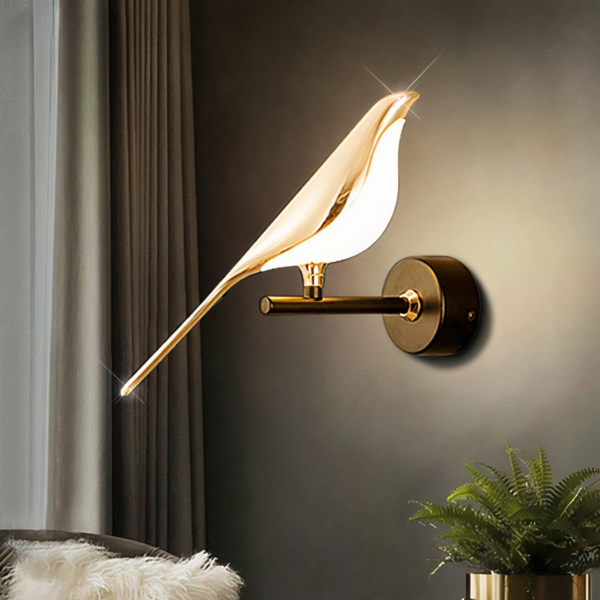
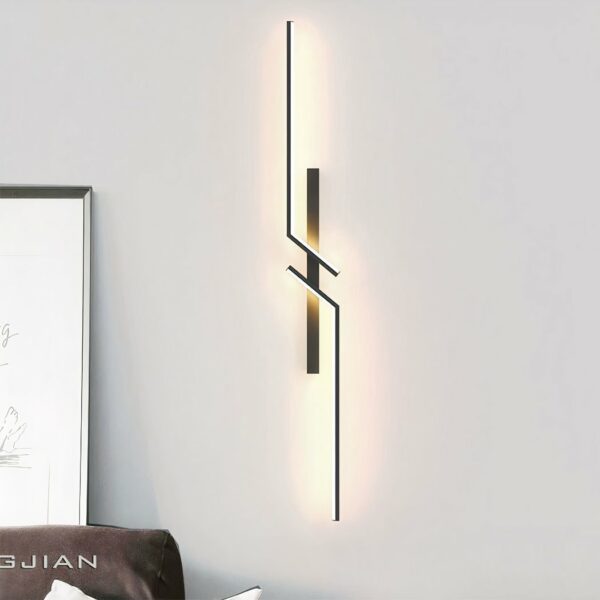 Price range: £55.99 through £118.99 Add to cart - £118.99 This product has multiple variants. The options may be chosen on the product page

 £58.99 Add to cart - £58.99 This product has multiple variants. The options may be chosen on the product page


 £109.99 Add to cart - £109.99 This product has multiple variants. The options may be chosen on the product page


 £266.99 Add to cart - £266.99 This product has multiple variants. The options may be chosen on the product page
 £55.99 Add to cart - £55.99 This product has multiple variants. The options may be chosen on the product page
 £82.99 Add to cart - £82.99 This product has multiple variants. The options may be chosen on the product page

 £113.99 Add to cart - £113.99 This product has multiple variants. The options may be chosen on the product page

 £172.99 Add to cart - £172.99 This product has multiple variants. The options may be chosen on the product page
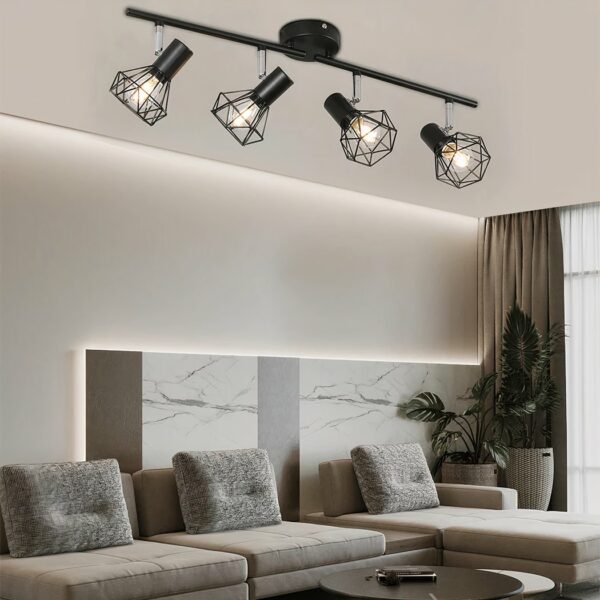
 Price range: £42.99 through £65.99 Add to cart - £65.99 This product has multiple variants. The options may be chosen on the product page