

Table of Contents
Battery operated wall lights carry their own power, so they need no wiring at all: disposable batteries, a battery you recharge by USB, or a small solar panel outdoors. Where you want a real room light but have no wired point, the other answer is a plug-in wall light fed from an existing socket.
A hallway with no light point, an attic that was never wired, a reading corner far from any socket: it happens all the time, especially in older UK homes. There is no single solution, because “no wiring” covers two quite different needs. Either you want light that is completely independent and plugs in nowhere. Or there is electricity in the room, just not where you want the light. This guide covers both cases with their real limits, from battery and rechargeable wall lights to plug in wall lights, and explains where the rules in England draw the line between a DIY job and work for a registered electrician.
What are battery operated wall lights?
A light always needs energy. “Battery operated” or “wireless” simply means no connection to the mains: the energy comes from a battery, from a built-in cell you charge beforehand, or from a small solar panel that charges that cell during the day. LEDs changed everything here. They draw so little power that a small battery can now give useful light for several hours, where an old filament bulb would have flattened it in minutes.
Each option has its own territory. The table sums up what to expect from each before you buy.
| Solution | Power source | Best for | Main limit |
|---|---|---|---|
| Battery wall light | Disposable or rechargeable AA or AAA batteries | Wardrobe, under the stairs, emergencies | Batteries to replace, modest light |
| Rechargeable wall light | Built-in battery, USB charging | Bedside, reading corner, hallway | Regular charging |
| Wall or ceiling light with motion sensor | Built-in battery | Landing, stairs, walk-in wardrobe | Light for passing through, not for living in |
| Solar wall light | Solar panel and battery | Front door, shed, garden wall | Depends on daylight |
| Plug-in wall light | Existing socket, three-pin plug | Bedroom, living room, any fixed light | A visible cord to route neatly |
| New wired light point | Fixed installation | A permanent ceiling or wall light | Work for a qualified electrician |
The first four lines are truly wire-free. The last two use the mains, but they are often the right answer when what you really want is a proper light on a wall or ceiling with no wiring behind it: we come back to them below.
Battery, rechargeable or solar: which power source?
The choice of power source decides how often you will have to think about the light, and how much light you can expect from it.
Disposable batteries: the simplest start
Wall lights that take AA or AAA batteries are the quickest fix for small spaces and occasional needs. They come in every style, need no skill at all, and leave nothing on the wall when you move out. Batteries swap in seconds, but you keep buying them, and in a light that runs every evening the cost adds up. Rechargeable AA cells ease that, at the price of a charger to manage. In a wardrobe or a cupboard you rarely open, where the light only comes on for a few seconds at a time, batteries last a long while.
Used batteries should not go in the household bin in the UK. You can return them free of charge to your council’s household waste recycling centre, or to the battery collection box found in many supermarkets and other shops that sell batteries. Shops selling 32 kg or more of batteries a year must take them back even if you did not buy them there, and you do not have to buy anything.
Rechargeable wall lights: the most practical option
A rechargeable wall light has a built-in battery that you charge a few hours by USB, then it runs far from any socket. Most detach from a wall plate, often magnetic, so you lift the light off, charge it like a phone and clip it back. Choose a model that charges through a standard USB cable: you can use a charger you already own. Many offer several brightness levels, a choice of warm or cooler white, a remote or a touch control, and a timer. It is the natural choice for a bedside with no socket nearby, a reading corner or a dark hallway.
The main thing to accept is the charging routine. A light used for an hour every evening will need charging every week or two, depending on the battery and the brightness you choose. Running time is always quoted at the lowest setting, so read it with that in mind.
Solar wall lights: for outdoors
A solar light brings three parts together: a small photovoltaic panel, a battery and an LED. The panel charges the battery during the day, and a sensor switches the light on at dusk. It is the most independent solution there is: no batteries to swap, no cable, no charging to remember. A solar wall light lights a front door, a shed or a side passage without anyone digging a trench.

Its condition is simple: the panel must see the sky. Mount it outdoors, clear of the shadow of a tree, a hedge or an overhanging roof. Indoors, a solar light only works properly if its panel is mounted outside and linked by a cable through a window frame or a wall: behind glass, the panel collects much less light.
What are the drawbacks of battery and solar lights?
Their output is lower than that of a mains light: they mark a path, light a doorway or a bedside, they do not light a whole room the way a pendant does. Their running time also varies. A solar light charges less after a grey day, and in a British winter, when days are short and often overcast, it will switch off earlier in the evening than it does in June. Finally, every built-in battery wears out with age. Before you buy, check whether the battery can be replaced: that decides the real lifespan of the light. For bright, lasting light every evening, a mains fitting, even one that simply plugs in, stays the better choice.
What to check before you buy a wireless wall light
- The light output in lumens. On a battery light, it is the only figure that tells you what you will actually see. The wattage only tells you how much power it draws. A small bedside or hallway light works with a modest output; a reading light needs a good deal more, aimed at the page.
- The colour of the light. A warm white, around 2,700 K to 3,000 K, suits living rooms and bedrooms. A cooler white is better in a garage, a utility room or a shed.
- A motion sensor. In a hallway, on a landing or in a wardrobe, the sensor is what makes the battery last: the light only comes on when someone passes and switches itself off afterwards.
- The controls. Touch button, remote, timer, dimming: the more easily you can turn it down, the longer each charge lasts.
- The mounting. Adhesive, magnet or two screws: the easier it is to lift the light off, the easier it is to charge.
Plug in wall lights: mains light with no rewiring
When you want the brightness of a real wall light every evening, without batteries and without chasing cables into the plaster, a plug-in wall light is the most underrated answer. The fitting screws to the wall like any other, and a fabric cord runs down to a standard three-pin plug in an existing socket. An inline switch on the cord turns it on and off. There is nothing to connect behind the wall, so there is no electrical installation work involved: you are plugging in an appliance, exactly as you would a lamp.

Our minimalist natural wood wall light works this way: a beech cylinder fixed to the wall, a black and white fabric cord, a switch on the cord and a standard E27 bulb. Above a bedside table or an armchair, the cord becomes part of the look. To keep it neat, run it straight down or along a clean diagonal, fix it with small cable clips every 30 cm or so, and bring it to the nearest socket along the skirting. Use a light made to be plugged in: never add a plug yourself to a fitting designed to be wired into the fixed installation.
Wall lights with a switch on the fitting are another simple answer. Our selection of wall lights with a switch includes models such as the black wall light with an adjustable spot and switch, which you can aim at a book or a picture and switch on without getting up. For a bed, our reading wall lights put the light where you need it.
If you would rather switch a plug-in light from the door, a smart plug does it: the light stays switched on, the smart plug cuts or restores the socket, and you control it from a wireless wall button, a phone or a timer. It takes a few minutes to set up at the start, but no cable to run.
Mounting a light without drilling
If you would rather not drill your walls, there are very strong adhesive mounts. In a few minutes you can fix a wireless wall light above a mirror, a headboard or on a stairwell wall. Some models sit on a magnetic plate: you lift the light off in one movement to charge it, then put it back without unscrewing anything.
Three precautions make the difference between a fixing that holds for years and a light that falls after a week:
- Clean and dry the surface before fitting: dust and grease stop the adhesive from gripping.
- Respect the curing time stated by the maker of the adhesive before hanging the light.
- Check the load the adhesive or hook can take, and compare it with the weight of the light. These fixings are for light fittings only.
Avoid adhesive on wallpaper, fresh paint or crumbling plaster: it is the surface that gives way, not the glue. A plug-in wall light, heavier and permanent, is fixed with proper screws and wall plugs.
How to get a ceiling light with no wiring
This is the most common question, and the one that needs the most care. An ordinary ceiling light or pendant runs on 230 V: it needs current, and batteries will not replace it. There are four options, from the simplest to the most complete.
1. A battery ceiling light
Battery LED ceiling lights, often with a motion sensor and a remote, screw to the ceiling with no connection at all. They suit an attic used for storage, a shed, a garage or an airing cupboard, the rooms you pass through without staying. For a living room, their light and their running time are too limited.
2. A plug-in pendant on a hook
Some pendants are sold with a long cord ending in a plug. You hang the pendant from a hook in the ceiling, then guide the cord through one or two more hooks to a wall socket. The look is deliberate, very popular in industrial and bohemian interiors. Here too, only use a pendant designed to be plugged in.
3. A floor lamp on a switched socket
In a room with no ceiling light, a floor lamp plugged into a socket gives the same general light. With a smart plug and a wireless switch by the door, you turn it on as you come in, like a ceiling light, with no new cable in the wall.
4. A new wired light point
The lasting solution is to bring power to the ceiling from the existing installation. In England, this is where the job leaves simple DIY. Part P of the Building Regulations makes some work in a home notifiable: a new circuit, replacing the consumer unit, and any new work or change to a circuit in the zones around a bath or shower. A registered electrician, a member of a competent person scheme such as NICEIC or NAPIT, can carry it out, certify it and register it; otherwise building control must be told before the work starts. Wales has similar rules, while Scotland and Northern Ireland have their own. Smaller jobs, such as replacing a light fitting on the same point or adding a light point to an existing circuit outside a bathroom, are not notifiable, but they must still meet BS 7671, the IET Wiring Regulations, and Electrical Safety First advises using a registered electrician for any electrical work in the home. The electrician gives you an Electrical Installation Certificate, or a Minor Electrical Installation Works Certificate for a small job.
Which solution for which room?
The right answer depends less on the light than on how you use it: how long it stays on, and how often. Here are the most common cases.
Hallway, landing and stairs
You pass through without stopping: it is the ideal ground for battery wall lights and light bars with a motion sensor. The light comes on as you pass and goes off by itself, which spares the battery. On a staircase, several small lights near the steps are better than one light at the top of the flight: every step stays visible.
Attic, garage and shed
For a storage space, a battery ceiling light with a sensor or a rechargeable lantern hung from a beam is enough. Outside the back door or on the shed wall, a solar light takes over. If the attic becomes a bedroom or a home office, the approach changes: a living space deserves a proper light point, and that is the moment to bring in a registered electrician, ideally while the room is being insulated and boarded. Under a sloping attic ceiling, our low ceiling lighting ideas help you choose fittings that keep the headroom.
Bedroom and reading corner
A rechargeable bedside light solves the problem of a bedside table far from the sockets. For long reading sessions, a mains light is more comfortable: its light does not fade as the evening goes on. A plug-in wall light or one of our headboard lights gives you steady light on the page, with nothing to charge.
Wardrobe, airing cupboard and utility room
Battery LED bars stuck under a shelf or above the door come on when you open it, thanks to their sensor. Choose rechargeable rather than disposable batteries: in a wardrobe you forget about them, and old batteries end up leaking.
Bathroom
Even on a battery, a light near a basin or a shower gets splashes and steam: check that it is protected against water. And remember that the main light in a bathroom is a mains installation in a special location under BS 7671: new work or a change to a circuit in the zones around the bath or shower is notifiable under Part P, a job for a registered electrician, with no room for improvising.
Rented home
Adhesive mounts, magnetic plates, rechargeable lights and plug-in wall lights on existing sockets let you light a rented home and leave nothing behind at the end of the tenancy apart from a couple of screw holes. For any change to the fixed installation, agree it with your landlord first, and have it done by a qualified electrician.
Lighting for a power cut
The question changes here: it is no longer about decoration, but about keeping some light when the mains is off. A few items are enough, as long as they are charged before you need them.
- A torch or a head torch for each person, always kept in the same place. A head torch leaves your hands free at the fuse board.
- A rechargeable lantern, which lights a whole table rather than a single spot.
- Battery night lights that come on by themselves when the power goes: they mark out a hallway or a landing at night.
- Candles only as a last resort, on a steady holder, away from curtains, and never left unattended. A battery LED candle gives the same glow with no fire risk.
Check the charge of lanterns and the state of spare batteries twice a year, when the clocks change. It is also a good moment to press the test button on your RCD, the safety switch on the fuse board: Electrical Safety First recommends testing it regularly.
For light with no wiring at all, rely on batteries, a rechargeable cell or the sun, and accept that it is a secondary light. For proper room lighting where there is no wired point, a plug-in wall light is the quickest route, and a new light point wired by a registered electrician is the lasting one. Browse all our wall lights to find the fitting that suits the spot.
Battery operated wall lights: frequently asked questions
Are there battery operated wall lights?
Yes. Some run on disposable AA or AAA batteries, others have a built-in battery that you charge by USB, and solar models charge themselves outdoors. With LEDs, which draw very little power, they give useful light for several hours with no wiring at all. They suit hallways, wardrobes, bedsides and reading corners rather than lighting a whole room.
Are rechargeable wall lights any good?
They are a good answer where there is no socket nearby: a bedside, a reading corner, a dark hallway. Choose one that charges through a standard USB cable, with a detachable or magnetic mount so charging is easy, and check the output in lumens. Their light is lower than a mains fitting, and they need charging every week or two with daily use.
How long do battery operated wall lights last?
Per charge, it depends on the battery and the brightness: running times are quoted at the lowest setting, so expect less at full power. A motion sensor or a timer stretches each charge a lot. With age, the built-in battery wears out, so check before buying whether it can be replaced: that decides the real lifespan of the light.
What are the drawbacks of battery operated lights?
Their light is lower than that of a mains fitting, batteries have to be replaced or recharged, and running time falls as the battery ages. Solar lights also depend on daylight, which is short in a British winter. For bright light every evening, a plug-in wall light on an existing socket is often the better choice.
What wall lights don’t require wiring?
Battery, rechargeable and solar wall lights need no wiring at all. Plug-in wall lights need none behind the wall either: the fitting screws to the wall and its cord runs to a standard three-pin plug in an existing socket, with a switch on the cord. A new wired light point, on the other hand, is work for a qualified electrician.
How do I recycle the batteries from a wall light?
In the UK, used batteries should not go in the household bin. You can return them free of charge to your council’s household waste recycling centre, or to the battery collection box in many supermarkets and other shops that sell batteries. You do not have to buy anything, and a shop selling 32 kg or more of batteries a year must take them even if you bought them elsewhere.
Sources
- Battery waste: retailer and distributor responsibilities, free take-back of used portable batteries by shops selling 32 kg or more a year. GOV.UK
- Approved Document P, Electrical safety: dwellings, notifiable and non-notifiable electrical work in England. GOV.UK
- Electrical Safety First, RCDs explained, and advice to use a registered electrician for any electrical work in the home. Electrical Safety First
- BS 7671, the IET Wiring Regulations, Requirements for Electrical Installations. IET and BSI
Related products

Minimalist natural wood wall light with switch

Black ribbed adjustable spotlight wall light with switch
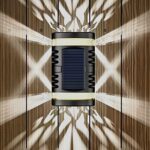
Waterproof solar LED wall light
See also

How to Brighten a Dark Room: Colours, Mirrors and the Right Lighting

Low Ceiling Lighting Ideas: How to Make a Low Ceiling Look Higher

How to Replace a Fluorescent Tube With LED: Wiring Diagrams and Pitfalls
