

Table of Contents
Modern farmhouse style takes the warmth of an old country house and makes it lighter and simpler. It mixes a few old pieces with clean modern lines, raw or weathered wood, linen, rattan, black iron and ceramic, in a palette of off-white, linen and sage green, under warm light coming from several points in the room.
You may know it as farmhouse style, country chic or the modern cottage look. Whatever the name, the idea is the same: keep the charm of a house that has been lived in for generations, without the clutter. Fewer objects, lighter walls, a handful of old pieces given room to breathe. In inspiration photos you notice the furniture and the fabrics; at home, it is the light that makes the mood. The same living room in linen and oak looks cold under a single bright ceiling light, and becomes welcoming under a wooden chandelier, a wall light and a lamp in warm white. In the UK, where the lights go on before five o’clock for several months of winter, that is not a detail. This guide gives you the key elements of the style, its colours with their codes, its materials, the lights that suit it and a lighting plan room by room.
What is modern farmhouse style?
Modern farmhouse is a way of decorating that borrows from rural houses and working kitchens, then pares them back. It draws on three sources. The first is the traditional British farmhouse: thick walls washed with lime, a flagstone or timber floor, a big kitchen that was the heart of the house, with the dresser full of china and the range that never went out. The second is the English country cottage, for its fabrics, its flowers and its painted furniture. The third is the American farmhouse, with its board-and-batten walls, open shelving and black metal details, which gave the style its name and its popularity over the last decade.
The “modern” part is restraint. Where an old farmhouse gathers a lifetime of objects, the modern version chooses: one old dresser, a long wooden table, a light fitting with character, and around them, space and simple materials. It also accepts contemporary pieces without complexes. A modern sofa in washed linen next to a scrubbed pine table, or simple bentwood chairs around an old oak one, is typical of the look.
Modern farmhouse, cottage, rustic and shabby chic: the differences
These styles share a love of wood and old things, and they are often confused. Here is what separates them.
| Rustic | Shabby chic | Cottage | Modern farmhouse | |
|---|---|---|---|---|
| Colours | Browns, oxblood, dark tones | White, dusty pink, pastels | Cream, soft greens and blues, florals | Off-white, linen, sage green, light wood, black accents |
| Wood | Dark, heavy, exposed beams | Painted and deliberately worn | Painted pine, old oak | Raw, oiled or weathered, often pale |
| Furniture | Heavy dressers and sideboards | Romantic, curved, flea market finds | Small, mismatched, comfortable | A few old pieces, simple lines, some modern ones |
| Fabrics | Checks, thick wool, tweed | Lace, roses, frills | Florals, gingham, patchwork | Washed linen, cotton, discreet stripes or checks |
| Light | Iron chandelier, few sources | Crystal drops, pleated shades | Fabric shades, table lamps | Wooden or rattan chandelier, wall lights, warm white in several points |
| Feeling | Tradition, weight | Nostalgia, softness | Cosy, a little busy | Authentic and light |
Shabby chic, which appeared in Britain in the 1980s, is the romantic cousin: furniture painted then sanded to look worn, flowers and lace. Modern farmhouse keeps the weathered furniture but drops the frills. For a harder, more urban version, with black metal and brick, see our guide to industrial lighting; for a calmer one, our guide to Japandi style, which shares its taste for pale wood and linen.
The key elements of a modern farmhouse interior
A modern farmhouse room is recognised less by one piece of furniture than by the way it is put together. Five elements come back every time:
- Old and new, side by side. A dresser from an auction, a farmhouse table, an old ladder used as a throw rack, next to a contemporary sofa and simple chairs. Nothing matches, everything is chosen.
- Natural, weathered materials. Raw or oiled wood, stone, terracotta, black iron, linen, rattan. Wear is a quality: a marked tabletop tells a story.
- A light, soft palette. Off-white, linen, pearl grey and sage green, given structure by wood and dark metal.
- Everyday objects on show. Wicker baskets, stoneware jugs, glass jars, chopping boards, blue and white china, a jug of garden flowers or dried grasses. They sit on an open shelf or a dresser, in small numbers.
- Warm light from several points. One central light with character, in wood, rattan or iron, and several low sources for the evening: wall lights, lamps with fabric shades, candles.
Common farmhouse decor mistakes
Farmhouse style tips into pastiche quickly. The first trap is overload: signs that say “farmhouse”, rows of plates on the wall and a collection of roosters turn a sitting room into a gift shop. The second is matching everything: a bedroom entirely in varnished pine, or a room where every piece is painted white, loses the contrast that makes the style. The third is a light fitting that is too heavy: a large black iron chandelier under a low ceiling crushes the room, where an open wooden or rattan pendant lets the eye pass through. The last is cool white light: under a 4,000 K bulb, linen turns grey and oiled wood loses its honey tone. Old British cottages and farmhouses often have low ceilings, which makes the choice of the central light even more important.
Modern farmhouse colours: off-white, linen, sage green and weathered wood
Modern farmhouse colours are warm neutrals and shades taken from nature: off-white, linen, greige, pearl grey, sage green and a greyed blue, with wood and a few touches of black for structure. Avoid brilliant white on large walls: under evening light it looks cold, even bluish, next to wood. Bright colours still have a place in small doses, on a red check tea towel or a blue and white jug.
To balance your colours, we recommend the 60/30/10 split: about 60% light base on the walls and large fabrics, 30% deeper materials on the furniture and floor, and 10% accents. Here is the palette we use as a reference:
- Off-white, #F3EFE6: walls, ceiling and woodwork. It reflects light while keeping a creamy tone.
- Linen, #E3D8C5: curtains, bedding, loose covers on the sofa.
- Weathered oak, #A9855E: the farmhouse table, beams, floorboards, the frame of a wooden chandelier.
- Sage green, #A4AE95: a painted dresser, kitchen units, one wall or cushions. It links the house with the garden.
- Grey blue, #8E9DA6: a painted cupboard, blue and white china, a striped fabric.
- Iron black, #2F2D2B: ironwork, handles, curtain poles, a black iron wall light.

The colour of the light completes the palette. A warm white bulb, around 2,700 K, makes linen glow and brings out the grain of the wood; above 3,000 K, off-whites start to look grey. If you are unsure about a sage or grey blue wall, paint a large sample and look at it in the evening, under your own bulbs. In a north-facing room, which gets cooler daylight all year, lean towards the warmer versions of each colour.
Farmhouse materials: wood, rattan, black iron, linen and ceramic
Modern farmhouse is first a style you can touch. Each material has its role in the room, and each one also changes the way light spreads.
Wood
Oak, pine, ash, walnut or reclaimed timber: wood is everywhere, from the floorboards and beams to the farmhouse table. Raw, waxed or oiled, it keeps its grain visible; painted in off-white or sage then lightly sanded, it takes on the look of family furniture. Under warm light, pale wood sends a golden glow back onto the walls, and that is one of the secrets of a farmhouse evening.
Rattan and wicker
Rattan comes from the stems of climbing palms that grow in tropical forests, mostly in South-East Asia: supple and very strong, they are split and woven into furniture and baskets. Wicker is the woven work itself, often made with willow. Baskets, armchairs, headboards and woven shades bring the lightness of the style. As a light, a woven pendant casts patterned shadows on the ceiling and walls in the evening, something no solid shade can do.
Black iron
True wrought iron was iron worked hot and hammered into shape by a smith, which gave the old gates, fire irons and door latches of country houses their look. It is hardly made any more: most “wrought iron” light fittings and curtain poles today are mild steel, bent or forged and finished in matt black. The effect is the same, a dark line that gives structure to a light room. Use it in touches, a wall light, a pole, the handles of a dresser, rather than in a full set, which would push the room towards rustic.
Linen, cotton and wool
Washed and crumpled linen, heavy cotton, a wool throw, a little gingham or ticking stripe: fabrics stay plain or have discreet patterns. A linen curtain filters daylight, and a fabric lampshade does the same with a bulb: both soften contrasts and take the harshness out of an LED.
Ceramic, stoneware and stone
White glazed ceramic, stoneware jugs, terracotta tiles, a stone sink or a limestone fireplace: these mineral materials give the room weight. Glazed ceramic has a slight sheen that catches the light without glare. A ceramic pendant over a table or a kitchen worktop is the best example.
Modern farmhouse lighting: the wooden chandelier as the signature piece
In a farmhouse interior, the central light is not a simple light point: it is the object that sets the tone of the room, just like an old dresser. The style has three main families, wood, rattan and black iron, joined by ceramic and glass in the kitchen.
The wooden chandelier
The wooden chandelier is the most typical piece of the style. It takes the idea of the old farmhouse lights and makes it lighter: open slats, a pale wooden globe, or a flush wooden ceiling light for low ceilings. Our solid wood pendant light, for example, surrounds the bulb with a cage of curved wooden slats, in a shade of 30 x 28 cm: lit, it lets the light through between the slats and draws a warm halo above the table. It is made in Poland, weighs only 0.25 kg and takes an E27 LED bulb. Our wooden chandelier collection brings together models for the living room as well as the bedroom.
The rattan or wicker pendant
Lighter again, the rattan, wicker or natural fibre pendant is the bohemian side of the style. Its light passes through the weave and throws patterns on the walls: it works over a farmhouse table or in a bedroom. Under a low ceiling, choose a wide, flat shape rather than a big ball. You will find these models in our rattan pendant light collection.
The black iron wall light
The iron wall light descends from the old wall candle holder: a curved arm, sometimes scrolls, sometimes a small fabric shade. It lights at eye level, on each side of a fireplace, beside a mirror or on the stairs, and it brings the dark note of the palette. Our wrought iron wall light range covers this theme, from simple to more ornate designs.
Ceramic and glass pendants
In the kitchen, glazed ceramic and glass take over from wood: they are easy to wipe clean and give a soft, even light. Bell shapes and wavy rims recall old tableware. Hang one alone over a small table or two or three in a row over an island.
Size and height: the right measurements
Over a table, the bottom of a pendant sits about 60 cm above the tabletop, the reference given by licht.de, the German lighting information centre. For the diameter, our advice: no more than half the width of the table; over a long farmhouse table, hang two or three pendants rather than one oversized shade. Our guide to dining room lights gives the other practical checks. Under a low ceiling, choose a flush wooden ceiling light or a short pendant that nobody walks into.
Bulbs: warm white, and B22 or E27
Choose warm white LED bulbs, around 2,700 K, for every light in the room. Under an open wooden cage, a woven shade or clear glass, where the bulb shows, a filament or frosted bulb avoids glare. Colour rendering counts too: since September 2021, EU ecodesign rules have required a colour rendering index of at least 80 for most household bulbs, and a CRI of 90 or more keeps wood and linen truer. Check the cap before you buy. Most UK homes use the B22 bayonet cap in their ceiling pendants and lamps, while our farmhouse lights, like many fittings designed for the European market, take E27 screw bulbs: the fitting brings its own lampholder, so you simply buy E27 bulbs for it. Our guide to the B22 bulb explains the difference. If you need a new light point, on a wall beside the bed for instance, that is a job for a qualified electrician, and the work must meet BS 7671, the IET Wiring Regulations.
Living room, kitchen, bedroom: a lighting plan room by room
A farmhouse home comes alive in the evening, around the table or the fire. From one room to the next the principle stays the same: one light with character, two or three low sources, and warm white everywhere. The table sums up our recommendations, detailed below.
| Room | Central light | Extra light | Setting |
|---|---|---|---|
| Living room | Wooden chandelier or rattan pendant | Black iron wall light, lamp with a linen shade | 2,700 K, dimmer on the central light |
| Kitchen | Ceramic or wooden pendants over the island or table | LED strip hidden under the wall units | 2,700 to 3,000 K |
| Dining room | One large wooden pendant, or two or three in a row | Wall light by the dresser, candles | 2,700 K, pendant about 60 cm above the table |
| Bedroom | Flush wooden ceiling light or small rattan pendant | Two wall lights with fabric shades by the bed | 2,700 K, ceiling light off in the evening |
| Hall | Flush wooden ceiling light or lantern | Black iron wall light by the mirror | Warm white |
Modern farmhouse living room
A sofa in natural linen, a coffee table in raw wood or an old trunk, a jute rug, a rattan armchair, a stove or an open fire: the farmhouse living room is the room of the mix. Hang the wooden chandelier or the rattan pendant over the coffee table or the dining corner, then add two low sources: a wall light beside the fireplace, a lamp with a linen shade next to the sofa. With a dimmer on the central light, you move from dinner light to evening light. The idea of layers of light is covered in our guide to cosy lighting, and the farmhouse look is its country version.
Modern farmhouse kitchen
Painted units in sage or off-white, a wooden or stone worktop, open shelves, a Belfast sink, a range cooker: the kitchen is often the most “farmhouse” room in the house, as it was in the old British farmhouse where the family lived around the hearth. Over the island or the table, two or three ceramic or wooden pendants give the character; for the worktop, an LED strip hidden under the wall units lights without shadows. Our guide to kitchen lighting sets out these three layers of light.

Modern farmhouse bedroom
A wooden or painted headboard, washed linen bedding, a wool throw, an old chest of drawers: the farmhouse bedroom stays simple. Two wall lights with fabric shades on each side of the bed replace bedside lamps and free up the bedside tables. Keep a flush wooden ceiling light or a small rattan pendant for tidying and getting dressed, and switch it off in the evening. Sleep researchers published consensus recommendations in 2022 that advise keeping light low for at least three hours before bedtime, and the bedroom as dark as possible at night: soft, warm, low light is exactly what a farmhouse bedroom asks for.

Dining room and hall
The farmhouse dining room is built around a big wooden table, with mismatched chairs or a bench. Above it, one large wooden pendant, or two or three pendants in a row, make an island of light for the meal, while a wall light or a few candles light the dresser. In the hall, a black iron wall light beside an old mirror and a row of wooden pegs are enough: the first light you see when you come in sets the tone for the whole house.
Frequently asked questions about modern farmhouse style
What defines a modern farmhouse?
A modern farmhouse interior blends traditional farmhouse elements with a simpler, contemporary look: a few old pieces such as a dresser or a farmhouse table, raw or weathered wood, linen, rattan, black iron and ceramic, a light palette of off-white, linen and sage green, and clean lines. Warm light from several sources, around 2,700 K, finishes the look.
Is farmhouse style out for 2026?
The themed version is: signs, rows of plates and everything distressed now look dated. The pared-back version is not. When farmhouse style focuses on good natural materials, a few pieces with a story and warm, layered light, it stops being a trend and becomes a lasting way to furnish a home.
What style is replacing modern farmhouse?
The style most often described as its successor is the modern cottage look: the same love of wood, old furniture and natural fabrics, with more colour, more pattern and fewer black and white contrasts. It is an evolution rather than a break, so a modern farmhouse room can move towards it with paint, fabrics and lampshades alone.
What colours are best for a modern farmhouse?
Warm neutrals for the base, off-white, linen, greige or pearl grey, lifted by sage green or a greyed blue on a dresser, the kitchen units or one wall. Wood and a few touches of black, on a wall light, handles or frames, give structure. Avoid brilliant white on large walls, and light the room in warm white so the colours stay soft in the evening.
What are common mistakes in farmhouse decor?
Too many themed objects, matching everything in one wood or one white, a heavy black iron chandelier under a low ceiling, and cool white bulbs. Keep a few chosen objects, mix old and modern pieces, pick an open wooden or rattan light for low ceilings, and use warm white LED bulbs around 2,700 K in every light of the room.
Which bulb should I use in a farmhouse light fitting?
A warm white LED bulb, around 2,700 K. Where the bulb shows, under an open wooden cage, a woven shade or clear glass, a filament or frosted bulb avoids glare. Check the cap on the product page: most UK ceiling pendants use a B22 bayonet, but many modern fittings take E27 screw bulbs. With a dimmable LED and a compatible dimmer, you can lower the light in the evening.
Sources
- Shabby chic, encyclopaedia article (British origin in the 1980s, painted and distressed furniture). Wikipedia
- Rattan, encyclopaedia article (stems of climbing palms, weaving and furniture). Wikipedia
- Wrought iron, encyclopaedia article (hand-forged iron, replaced by mild steel for most modern decorative work). Wikipedia
- Esszimmer, dining room lighting: bottom edge of the pendant about 60 cm above the table. licht.de
- Commission Regulation (EU) 2019/2020 laying down ecodesign requirements for light sources, applicable from 1 September 2021. European Union
- BS 7671, Requirements for Electrical Installations, the IET Wiring Regulations. IET and BSI
- Brown T. M. et al., Recommendations for daytime, evening, and nighttime indoor light exposure to best support physiology, sleep, and wakefulness in healthy adults, PLOS Biology, 2022. doi:10.1371/journal.pbio.3001571
Related products

Designer pendant light in natural wood, round openwork cage

Brown Fabric Wall Light
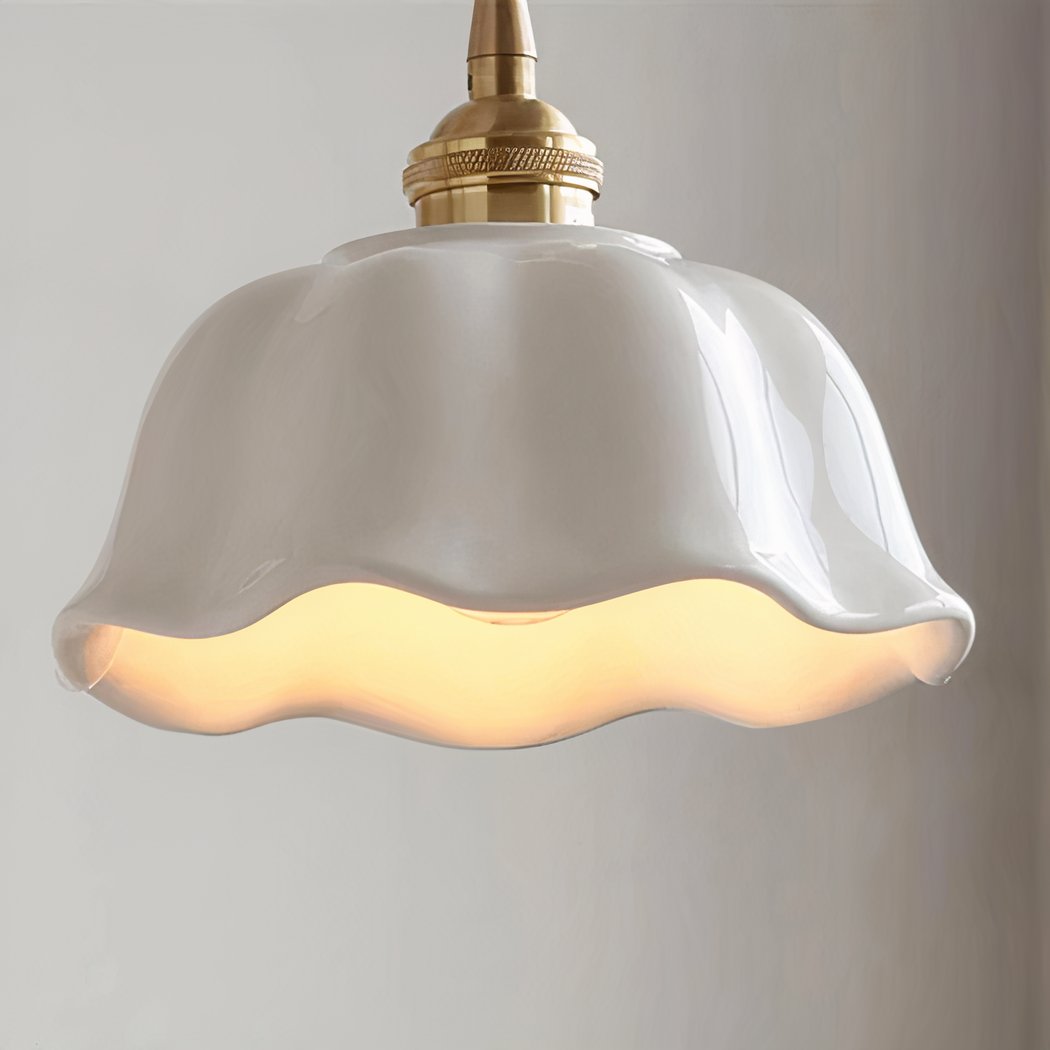
White wavy ceramic pendant light in vintage old farmhouse style
See also

How to Brighten a Dark Room: Colours, Mirrors and the Right Lighting

Low Ceiling Lighting Ideas: How to Make a Low Ceiling Look Higher

How to Replace a Fluorescent Tube With LED: Wiring Diagrams and Pitfalls
