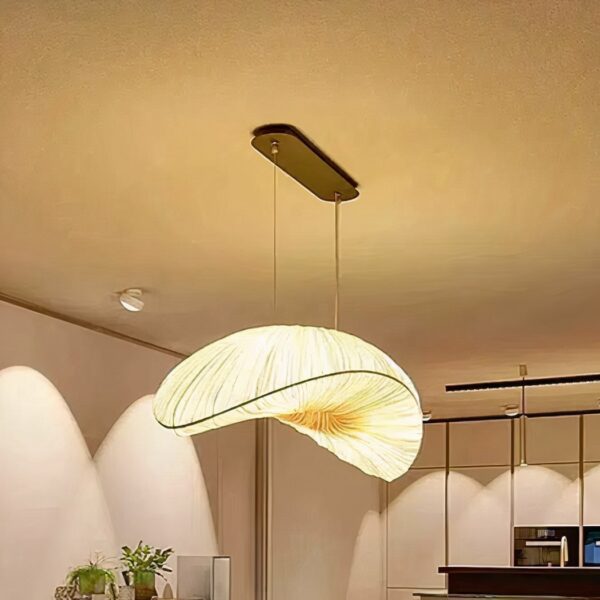
Choosing a textile lamp requires careful thought. To achieve an optimal result in your home, it is essential to combine specific technical criteria with your decorative desires.
Selecting the texture according to the desired ambience
Linen offers a soft, filtered light. Its fibrous texture creates a unique relief. Conversely, cotton diffuses more evenly. These natural materials radically transform your interior.
The density of the weave matters greatly. A tight weave conceals the bulb. An open weave lets through bright rays. Everything depends on the intended use.
Natural fibres bring an organic touch. They break the coldness of the walls. It’s a strong and particularly warm aesthetic choice.
Adapting the diameter to the volume of your space
The diameter must be proportional to the area. A small pendant light looks lost in a large living room. You need to find the right visual balance.
Monitor high-traffic areas. A lamp that is too low hinders movement. Always measure your ceiling height. Comfort comes first.
Prioritise wide formats for high ceilings. Large fabric shades occupy the space without weighing it down. They create an elegant focal point. Furnish the void with lightness.
Checking compatibility with LED sources
Fabric fears the heat of old bulbs. LED technology therefore becomes essential. It durably preserves the integrity of the fibres. It’s a necessary safety measure.
Choose suitable light power levels. A bulb that is too strong creates unsightly shadows. Prefer a soft light flow. This avoids marking the shade.
The colour rendering index (CRI) is crucial. A good CRI respects the real colour of the textile. Colours remain vibrant once the lamp is on. This technical detail changes everything.
The benefits of a textile diffuser for your comfort
But beyond the technical aspect, it’s the felt comfort that makes the daily difference with these models.
A soft and warm light diffusion
The fabric’s weave gently filters the rays. This creates an enveloping and very restful brightness. Your eyes no longer suffer direct glare. It’s a real relief after a long working day.
Unlike transparent glass, textile hides the source. The light becomes diffuse and uniform. You gain enormously in visual comfort in the rooms.
A fabric light fixture invites relaxation. It prepares the body for sleep. It’s the perfect accessory for a soothing night’s corner.
An incomparable visual lightness compared to metal
Metal can seem heavy and cold. Fabric brings a welcome softness. It immediately softens the lines of your furniture.
The textile material brings roundness. It balances the more rigid structures of the room. The whole becomes more harmonious and less austere. It’s a very effective decorator’s trick.
These structures are often very lightweight. They don’t overly stress your ceilings. Assembly remains simple and quick for everyone.
Advice for maintaining your fabric lamp shades
To keep this impeccable appearance, regular maintenance is necessary, even if it requires little effort.
Tips for dusting without damaging the fibres
Use the sticky roller. It’s the ideal tool for removing dust. A soft brush also works very well. You must act with great delicacy.
Banish aggressive chemical products. Classic detergents can discolour fabrics. They sometimes leave permanent halo marks. Instead, use a dry, clean cloth. Simplicity often guarantees the object’s longevity.
A quick pass each week is more than enough. This prevents deep soiling of the fibres. Your lamp will retain its original brightness for a long time.
Precautions to preserve the colour vibrancy
Be vigilant regarding direct sunlight. UV rays dull the textile pigments. Avoid placing the lamp facing a window. Protection starts with the right location.
Some protective fabric sprays limit the adherence of dirt. Always test on a hidden area first. This can save a valuable lampshade. Be cautious with the most delicate materials.
Prefer dry cleaning. For a localised stain, use Fuller’s earth. Never wet the fabric abundantly. Drying could deform the metal structure.
The flagship collections of our online shop
In short, once these tips are applied, all you have to do is choose the style that suits you from our selections.
Scandinavian minimalism and its natural linens
Adopt neutral tones for your interior. White or black fabric dominates this collection, with some beige. The shapes are streamlined and uncluttered. It’s the very essence of Nordic design.
Pair these models with wood interiors. They pair perfectly with light oak. They reinforce the hygge feel of your home. The atmosphere becomes serener immediately. It’s a safe choice for a modern living room.
Value the careful finishes of our products. Each seam is made with care. Quality is visible at first glance. Our lamps are made to last for years.
The bohemian chic spirit and natural textures
Discover the raw look of natural cane. This woven fibre brings character. The result is authentic and slightly wild. It captures the eye immediately in your room.
We recommend these models for the entrance. A fabric wall light sets the tone upon arrival. It creates a soft transition with the exterior. It’s warm and very welcoming for your guests. Don’t hesitate to mix sizes.
Highlight the distinctive character of each object. The woven look varies from model to model. You thus own a singular item. It’s the charm of natural materials with a hand-woven look.
The classic elegance of fabric-dressed chandeliers
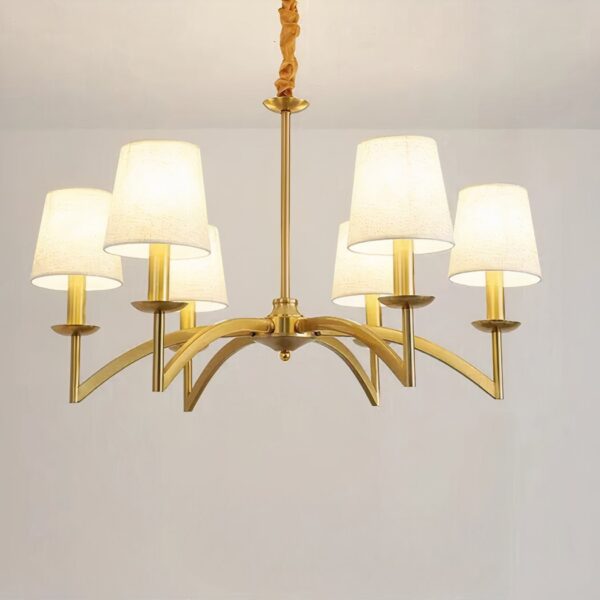
Highlight the refinement of fabric shades. They bring a subtle sheen to your decoration. Chandeliers with fabric shades are experiencing a revival. It’s the height of traditional chic.
Appreciate the interplay of delicate reflections. The satiny surface reflects light softly. This creates changing nuances depending on the angle. The effect is spectacular without being flashy. It’s discreet but real elegance.
Direct your choice towards the dining room. A fabric chandelier enhances your meals. It brings a solemn dimension to the room. Your dinners will instantly gain prestige.
Our fabric lighting in detail
This selection of more than 70 models is led by pendant lights (almost four in ten), followed by chandeliers (about a quarter), wall lights (about a fifth) and ceiling lights. All have fabric shades or diffusers, most often on a metal frame, sometimes with glass or wood. White and black dominate, with gold and beige touches. Examples include the black fabric ring pendant light in 50, 70 or 90 cm and the white fabric veil ceiling light, up to 140 x 140 cm, which works like a fabric lighting panel.
Styles are mainly modern and minimalist, with vintage, Japanese and industrial touches. E27 is by far the most common bulb fitting and some models have integrated LED; the bulb is included on about a third of them. Just over half ship from our warehouse in China and most of the others from our warehouse in Poland. Which fabric light for which room? A fabric chandelier or pendant light suits the living room and the dining room, while a fabric ceiling light spreads soft, even light in a bedroom.
See also: fabric pendant lights.
Frequently asked questions about fabric lighting
What type of fabric is best for a lampshade?
Linen and cotton are the most common choices: linen gives a soft, filtered light with a natural texture, while cotton diffuses light more evenly. A tight weave hides the bulb better, an open weave lets more light through.
Is a fabric chandelier safe with an LED bulb?
Yes. LED bulbs heat very little, which protects the fabric. Respect the maximum wattage shown on the product page and keep a little space between the bulb and the shade.
How do you clean fabric lighting?
Switch off the power, then use a lint roller, a soft brush or a dry cloth. Avoid water and chemical products, which can leave marks on the fabric.

 from £300.89 instead ofAdd to cart - £387.99 This product has multiple variants. The options may be chosen on the product page
 from £235.44 instead ofAdd to cart - £396.99 This product has multiple variants. The options may be chosen on the product page
 from £213.34 instead ofAdd to cart - £362.99 This product has multiple variants. The options may be chosen on the product page
 from £162.34 instead ofAdd to cart - £190.99 This product has multiple variants. The options may be chosen on the product page
 £184.44 instead ofAdd to cart - £216.99 This product has multiple variants. The options may be chosen on the product page