
Table of Contents
Not if it is a real 60 W filament or halogen bulb: the “max 40W” on a lamp is a heat limit, and that bulb gives off half as much heat again as the lamp was tested with. Yes with an LED: a bulb sold as a 60 W equivalent draws about 6 to 9.5 real watts, far below the limit.
“Can I use a 60W bulb in a 40W lamp?” nearly always comes up the same way. The bedside lamp feels too dim, you reach for a brighter bulb, and a small line stops you: “max 40W”, moulded into the lamp holder or printed under the base. This guide explains what that figure really limits, why the answer changed when filament bulbs left the shops, what gets damaged when you go over it, and how to get more light without touching the limit.
What “max 40W” on a lamp actually limits
It is not a brightness limit, and it is not the electrical capacity of the lamp holder. The British edition of the standard for Edison screw holders, BS EN IEC 60238, says it is based on lamps that draw no more than 2 amps on an E14 cap and 4 amps on an E27. At 230 volts, 4 amps is about 920 watts. That figure describes the lamps the standard has in mind, not a rating stamped on your holder, but it makes the point: the contacts of an E27 holder are designed around lamps far more powerful than 40 W. The same standard adds that once a holder is built into a light fitting, its maximum working temperature is set by the luminaire standard. The B22 bayonet holder of most British homes has its own standard, BS EN 61184, and the logic is the same.
So the 40 W is a heat limit, and it belongs to the whole fitting: holder, flex and shade assembled. The maker fits a lamp of the stated wattage, runs it until the temperatures settle, and measures every part that could suffer. The luminaire standard, BS EN IEC 60598-1, gives a whole section to these endurance and thermal tests, with tables of maximum temperatures for the main parts and common materials. A fitting is tested at each rated wattage in its range: the number you read is the most powerful lamp it passed with.
It has to be written on the fitting because the Electrical Equipment (Safety) Regulations 2016 require the characteristics needed for safe use to be marked on the equipment, or on a document that comes with it. The same schedule rules out dangerous temperatures and asks for equipment to stay safe under foreseeable overload. A word of honesty: the clauses of BS EN IEC 60598-1 are sold, only its contents and scope are public, so we quote no temperature from it. What follows rests on physics and on what you can see on the fittings themselves.
Filament or LED: why the answer has changed
A filament bulb, the old incandescent kind, turns a tiny share of its power into visible light. In Great Britain, the Ecodesign for Energy-Related Products and Energy Information (Lighting Products) Regulations 2021, S.I. 2021/1095, set the light a bulb must give before it may claim an equivalence: 470 lumens for “40 W”, 806 lumens for “60 W”, 1,521 lumens for “100 W”. That puts the old filament bulb at 11.8 lumens per watt for a 40 W and 13.4 for a 60 W, against a theoretical maximum of 683 lumens per watt that follows from the definition of the candela. Less than 2 per cent of its power becomes light; the other 98 per cent leaves as heat. A 60 W filament bulb is, near enough, a small 60 W heater a few centimetres from a lampshade designed for 40.
An LED plays in another league. The same regulations grade light sources by efficacy on the energy label: class A from 210 lumens per watt, B from 185, C from 160, D from 135, E from 110, F from 85, G below that.

Do the division for 806 lumens: 6.0 to 7.3 watts for a class E LED, 7.3 to 9.5 for class F, 3.8 at most for class A. The regulations also set a ceiling of their own: since 1 October 2021, a mains bulb placed on the market in Great Britain that gives 806 lumens at a colour rendering index of 80 may not draw more than about 8.9 W, or 9.4 W at CRI 90. Even the least efficient 60 W equivalent stays more than four times below a 40 W limit. Northern Ireland follows the EU rules under the Windsor Framework, with the same equivalences.
| Source giving 806 lumens | Real power drawn | Under a 40 W limit? |
|---|---|---|
| Filament bulb | 60 W | No, 50 per cent over |
| LED, class F | 7.3 to 9.5 W | Yes, 4 times under |
| LED, class E | 6.0 to 7.3 W | Yes, 5 to 6 times under |
| LED, class D | 5.0 to 6.0 W | Yes, 7 to 8 times under |
| LED, class A | 3.8 W at most | Yes, more than 10 times under |
Hence one rule with no exceptions: compare the limit with the real wattage of the bulb, never with the “equivalent” on the box. Electrical Safety First puts it simply: never use a bulb over the recommended power rating for your lamp. That rating is in real watts. The regulations require the lumens on the box to be printed at least twice as large as the watts: the smaller W figure is the one to check. A 100 W equivalent gives 1,521 lumens for about 7 to 15 W depending on its class, the regulations capping it at about 15.3 W, so it goes into a fitting marked 40 W without difficulty. The opposite mistake, reading the equivalence as a wattage and living with too little light, is far more common.
You will often see two figures on one product page. Our industrial black steel wall light with an exposed bulb, one of our bulb wall lights, states “max 15 W in LED (60 W in a traditional bulb)”. The second number is bigger, yet the first allows far more light: 15 watts of LED give 1,275 to 2,025 lumens in classes F and E, well beyond the 806 lumens of an old 60 W bulb.
Where the heat goes: shade, glass or lamp holder
Two bulbs that turn the same power into heat do not treat a fitting the same way, because they do not lose that heat by the same route. Almost nobody explains this, yet it decides what wears out.
A filament radiates. Heated to between 1,700 and 3,000 °C, it gives off radiation that is mostly invisible and passes through the glass. It travels in straight lines and heats whatever it meets: the fabric of the shade, the glass of a globe, the ceiling just above. The more closed the fitting, the more of that heat builds up inside.
An LED conducts. Its chip sends almost no infrared forward: its heat, plus that of its driver, leaves through the aluminium or ceramic body, then through the cap and the lamp holder. How hot a lamp cap gets even has a standard test method of its own, which the luminaire standard refers to.
The consequences run against intuition. With an LED, a fabric shade has nothing to fear, even close around the bulb. The hot spot has moved to the holder, the least ventilated part of the fitting, and it is the bulb’s own electronics that suffer. If an LED in a closed ceiling light ages too fast or starts to flicker, it has almost never exceeded the fitting’s limit: it has cooked its own driver, one of the bulb causes in our guide to flickering lights. In an enclosed fitting, choose a bulb stated as suitable for enclosed use. And with an integrated LED fitting, the question disappears: there is no bulb, so no maximum lamp wattage to read.
What actually gets damaged if you go over the limit
A 60 W filament bulb in a lamp marked 40 W does not start a fire that evening. What happens is slower, and that is what makes it dangerous: nothing warns you.
Plastics yellow, then deform. The body of a holder, its shade ring, a cord grip: held above their working temperature for long periods, they brown, turn brittle and lose their shape. The luminaire standard has thermal tests specific to thermoplastic fittings and a section on resistance to heat and fire.
Wire insulation ages. The most serious point and the least visible, because it happens inside the stem or the arm. Beyond its rated temperature, insulation stiffens and cracks, and the cracks often show only years later, when the flex is pulled.
The insulation fault comes last. Cracked insulation eventually lets a conductor touch another or a metal part. On a Class I fitting connected to earth, the RCD or the circuit breaker in the consumer unit cuts the supply. On a Class II fitting, or an older installation with no earth at that point, nothing warns you. Meanwhile a fabric shade browns above the bulb, a mark appears on the ceiling, a hot smell comes with the light: signals, not accidents.
Look for a holder yellowed or blackened around the centre contact, a shade ring that no longer screws on straight, a flex hard or cracked near the holder. In its advice on downlights, Electrical Safety First is clear: if the lamp holder or fitting shows signs of damage, overheating or discolouration, do not fit a replacement lamp, and seek advice from a registered electrician. The same holds for any light. The fix is a new holder or fitting, never a weaker bulb, and our guide on how to wire a lamp holder shows how to open one without breaking it. In England, replacing a holder or a fitting like for like on an existing point is not notifiable under Part P of the Building Regulations, but the work must still meet BS 7671, the IET Wiring Regulations. Wales has similar rules, while Scotland and Northern Ireland have their own.
And if a 60 W bulb has spent a year in a lamp marked 40 W? Switch off, take it apart, look. Usually you will find nothing, because the tests keep a margin and a lamp does not run all day. But look rather than assume.
Shade, globe or downlight: how much margin your fitting has
The same bulb in two fittings does not cause the same rise in temperature. That is why the figure is written on the fitting, not on the bulb.
| Type of fitting | Where the heat goes | What it changes |
|---|---|---|
| Exposed bulb, no shade | Straight out into the room | The most forgiving case: the limit still applies but is rarely tight |
| Fabric shade | Up and out through the open top | The fabric takes the radiation of a filament; with an LED, almost nothing |
| Globe or closed diffuser | Trapped around the bulb | The smallest margin: limits go down to 8 W in LED on our ceramic wall light with an opal glass globe |
| Downlight in a ceiling | Into the void above | Depends on what lies above, insulation first of all |
| Integrated LED | Through the body of the fitting | No bulb, so no maximum lamp wattage |

The downlight carries two markings almost nobody reads. One concerns the mounting surface: the luminaire standard deals separately with fittings for normally flammable surfaces, such as a boarded ceiling. The other concerns insulation, with a whole annex on the marking of fittings not designed to be covered by it. Electrical Safety First says it plainly: check the packaging and the fitting for the maximum wattage and do not exceed it, and do not let downlights touch or be covered by loft insulation unless they are rated for it. Under a blanket of insulation, the maximum wattage counts even with an LED, because the heat sink can no longer shed anything. To swap the bulb itself, our guide on how to change a spotlight bulb shows how to get it out without breaking the clips.
One last trap has nothing to do with heat: size. Globe and filament LEDs are often longer than the bulb they replace, so measure the space under the shade. And read the cap on the holder rather than on the old bulb: most British pendants take a B22 bayonet, while our fittings, like many made for the European market, take E27, E14 or G9. Our guide to the B22 bulb tells them apart in seconds.
What you really want is more light, not more watts
Nobody wants a 60 W bulb for the watts: the room is short of light. Since filaments went, the watt measures what the bulb takes from your meter, not the light it gives. Ask the question the other way round and it becomes easy.
Count in lumens. They are printed large on every box, and going from 470 to 806 lumens is 71 per cent more light. Our lumens to watts chart gives the match for every type of bulb, and our guide how many lumens do I need works out what your room actually needs.
Add sources rather than power. A room lit from a single point in the ceiling always looks dark in its corners. General light plus two or three low sources puts the light where you use it, and each bulb stays far below its limit. An opaque shade lights a table, an opal globe fills the room: no bulb will fix the wrong fitting.
Check the quality of that light. At equal lumens, a room can look dull because the bulb flattens colours: our guide to the colour rendering index explains which figure to read.
And the bill? At 25p per kWh, for example, and three hours a night, a 60 W filament bulb costs about £16.40 a year, an 806 lumen LED drawing 8.9 W about £2.40: the same light for a seventh of the cost.
Our four checks before you fit the bulb
- Read the figure on the fitting, not on the bulb already in it. It is moulded on the holder, printed under the base or in the instructions. If it gives one value for LED and another for traditional bulbs, the LED line applies to you.
- Compare it with the real wattage of the new bulb. BS EN 62560, the safety standard for LED bulbs, requires the rated power in watts on the bulb itself, as Electrical Safety First points out in its guide to retrofit LED lamps. Never read the figure after the word “equivalent”.
- Choose by lumens. They decide whether the room will be bright enough. Our guide to choosing LED bulbs covers the cap, the tint and dimming.
- Look at the holder while you are there. Yellowed plastic, a warped shade ring, a cracked flex: nothing goes back in until the part is replaced. Switch off, unplug a table lamp, and let the old bulb cool for a few minutes, as Electrical Safety First advises.
The short answer: with an LED that gives the light of a 60 W, the question hardly arises, because it draws about 9.5 W at most, below the limit of almost any lamp with a screw or bayonet holder. With a filament bulb, it does arise, and the answer is no.
Can I use a 60W bulb in a 40W lamp? Your questions answered
What happens if you put a higher wattage bulb in a lower wattage socket?
With a filament or halogen bulb, the damage is thermal and slow: the plastics of the holder yellow and deform, the wire insulation stiffens and cracks, and an insulation fault comes at the end of that road. A fabric shade or the ceiling above can brown. Nothing warns you on the first evening. With an LED, the real wattage stays far below the limit of an ordinary household fitting.
Can you use a 100W LED bulb in a 40W lamp?
Yes, if it is a 100 W equivalent, which is what the box means: 1,521 lumens for about 7 to 15 real watts depending on its class. If the fitting gives a separate LED limit, such as max 15 W, compare it with the watts printed on the bulb, because a 1,521 lumen bulb can come close. And that much light in a small lamp can be dazzling.
Can you use a 40 watt bulb in a 60 watt lamp?
Yes, without any risk. The figure on the fitting is a maximum, not a requirement: any bulb below it is fine if its cap matches the holder. You simply get less light, 470 lumens for an old 40 W against 806 for a 60 W. A 470 lumen LED draws about 3.5 to 5.5 W, far under either limit.
What is the difference between a 40W and a 60W light bulb?
In light, 470 lumens against 806, so about 71 per cent more for the 60 W. A 40 W filament bulb suited a wall light, a bedside lamp or a landing, not a whole living room. In heat, the 60 W gives off half as much again. Their LED equivalents draw about 3.5 to 5.5 W and 6 to 9.5 W, which is why the watt no longer describes a bulb.
Is 60W too bright for a lamp?
Not in itself: 806 lumens, the light of an old 60 W bulb, is the usual choice for a reading lamp or a pendant over a table. In a small bedside lamp with a thin shade, or a bare bulb at eye level, 470 lumens is often more comfortable. If unsure, choose a dimmable LED with a dimmer switch designed for LED.
Is 40W or 60W better for a living room?
Neither, if it is the only light. We count 200 to 300 lumens per square metre to fit in a living room, so a 25 m² room needs about 5,000 to 7,500 lumens, many times what one bulb gives. Spread them across a ceiling light and two or three lamps: each can take an 806 lumen LED, the light of an old 60 W, nowhere near its limit.
Sources
- BS EN IEC 60238, Edison screw lampholders, clause 1: data on which the standard is based (E14 caps for lamps up to 2 A, E27 up to 4 A); working temperatures of holders in luminaires set by the luminaire standard. BSI and the International Electrotechnical Commission
- BS EN IEC 60598-1, Luminaires, general requirements and tests: marking, endurance and thermal tests, resistance to heat and fire, flammable mounting surfaces, luminaires not to be covered by insulation. Contents and scope from the public preview. BSI and the International Electrotechnical Commission
- The Electrical Equipment (Safety) Regulations 2016, Schedule 1: marking of essential characteristics, no dangerous temperatures, safety under foreseeable overload. legislation.gov.uk
- The Ecodesign for Energy-Related Products and Energy Information (Lighting Products) Regulations 2021, S.I. 2021/1095: Schedule 3, paragraphs 1 and 6 (maximum power, packaging); Schedule 8, Table 10 (470 lm for 40 W, 806 lm for 60 W, 1,521 lm for 100 W); Schedule 12, Table 12 (classes A to G). legislation.gov.uk
- Safety advice for lamps and for downlights; Best Practice Guide 9, retrofit LED lamps (BS EN 62560 markings). Electrical Safety First
- BS 7671, the IET Wiring Regulations; Approved Document P, Electrical safety: dwellings. BSI, IET, HM Government
- Candela and Incandescent light bulb, encyclopaedia articles (683 lm/W, filament temperatures). Wikipedia
Related products

Contemporary Japanese Pendant Light in Beige Fabric
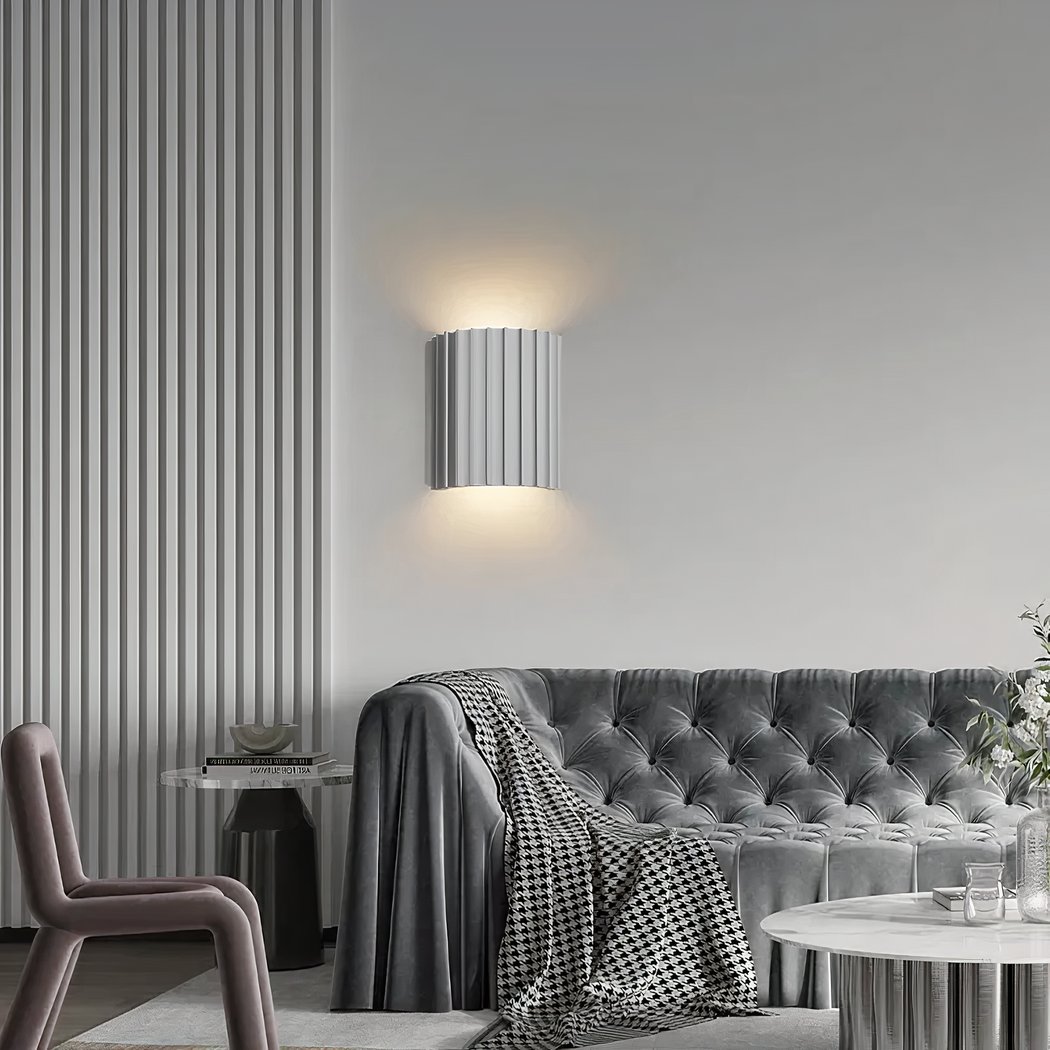
Scandinavian ribbed wall light with dual lighting
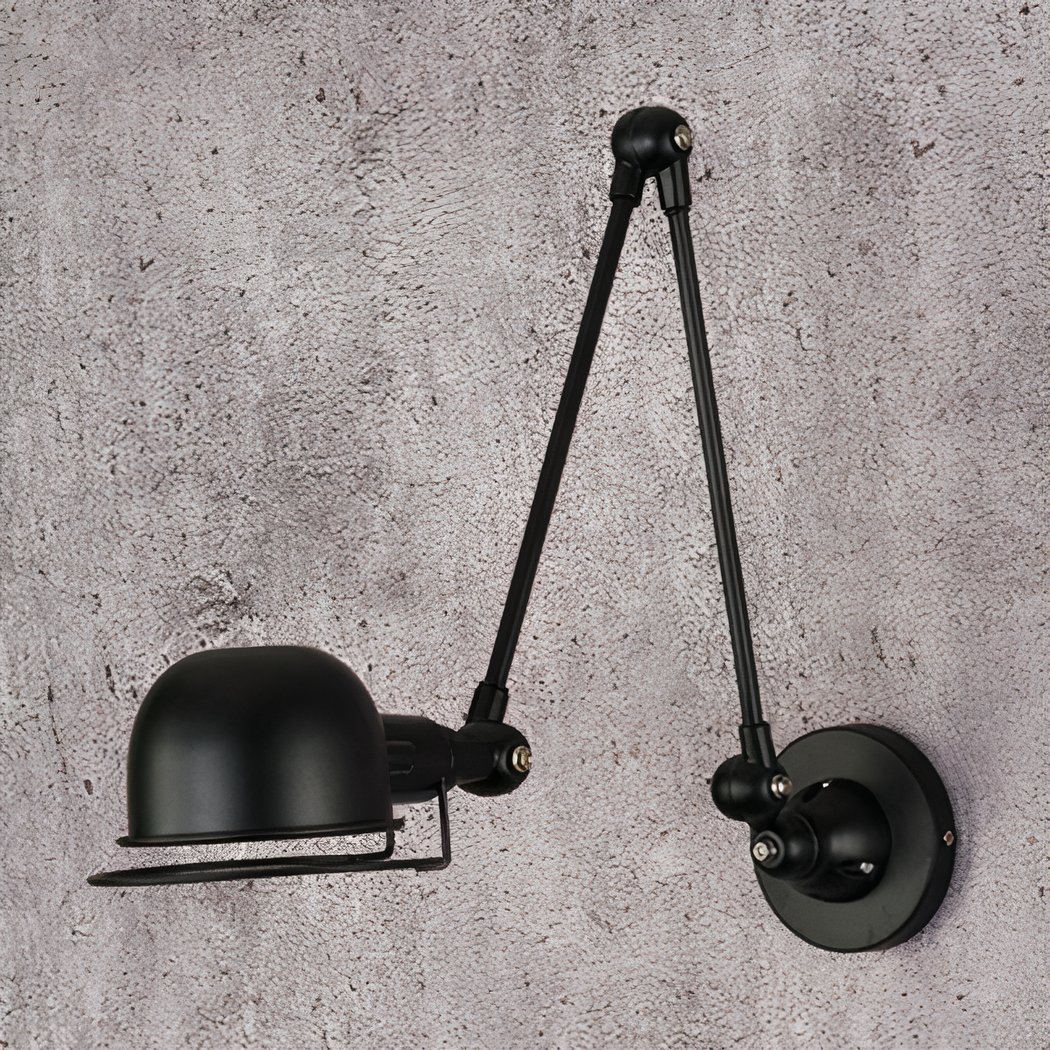
Retro adjustable black industrial LED wall light
See also

Can I Use a 60W Bulb in a 40W Lamp? What the Limit Really Protects

Calming Colours: The Palette, and the Evening Light It Cannot Do Without

Colour Rendering Index: What CRI Measures, and the R9 Figure the Box Leaves Out
